Monday, March 14, 2016

South Africa February 2016

South Africa – February 2016

In recounting a little, just a little, of our recent visit to South Africa, I want to fly the flag for the country, and to persuade you, if you needed persuading, that it is still a wonderful destination for anybody during the British winter.  And you can do it cheaply too, if you wish.  A friend recently travelled there with Ethiopian Airlines (a bit of a pause in Addis Ababa) for £430 return.  The huge depreciation of the Rand (<12 in 2005 when I last visited) to 22 or so to the pound means that it is cheap to stay, travel, and eat there.  I don’t deny however, that we are lucky to be able to go.

The primary reason for our visit was to watch cricket.  This will be dealt with in fairly short order.  Although it was wonderful to be at that iconic ground, Newlands, in Cape Town, we managed to watch England lose twice to South Africa in the space of six days.  Fortunately we did not go on to Johannesburg to watch an even more ignominious defeat in the final match of the tour.

And then, for the philosophers among you; is a great holiday defined by being able to catch up with, read, and put in the ‘done’ pile those books that you had earmarked for the trip?  Or is it precisely because you didn’t manage any of the books because the experience was so interesting, so all-embracing, and so busy that you can define it as a great holiday.  I didn’t manage much reading in South Africa.

Having visited South Africa many times before, mostly starting in Cape Town, was there anything left undone?  Well, yes, a lot.  We climbed Table Mountain, or to be more accurate we climbed the back of it, starting with a route up what is technically probably the first of the Twelve Apostles, up onto the main plateau, with its dips, valleys, and gorges (kloofs), and ultimately dropping down the infamous Skeleton Gorge to Kirstenbosch Gardens in Constantia.  On the way we saw some of the 1500 species of plants that exist on this plateau – more than the entire United Kingdom.  We did take a guide, a loquacious Afrikaner farmer from Stellenbosch by the name of Arie van Wijk.  It's probably a sensible move to take a guide.  Lindsay informs me that there are more deaths on Table Mountain each year than on Everest...  Another adventure was to the Cederberg Mountains, about 200 miles north of Cape Town on the way to Namaqualand, the area famed for its wildflowers in August and September.  Despite mist rolling in from the Atlantic down in the Cape, this large upland area of old red sandstone remains hot and dry.  We don’t feel we have done justice to this area as yet…

Although it’s hard to have a bad meal in South Africa, I should put in a mention for a restaurant whose chef is, I think, a meaningful rival to Heston Blumenthal.  Namely, the Greenhouse Restaurant at The Cellars, Hohenort, in Constantia.  The chef is Peter Tempelhoff (qv on the web).  Working on my friend’s Ethiopian Airlines budget, it is probably not much more expensive to travel to Cape Town to enjoy the tasting menus at Mr Tempelhoff’s establishment than to patronise one of Heston’s restaurants.  It was a fantastic experience.

Finally, two days in the relaxed and delightful company of Johnny and Diana Hutton-Squire on their farm in the Elgin Valley.  The pears were all picked the day after we arrived (February 21st) and various apples commenced the day after.  We walked a trail in the Kogelberg Mountains from Harold Porter gardens in Betty’s Bay, and saw the rare Nivenia Stokoei, a beautiful plant of the fynbos, in full azure bloom on the mountain side.

Does one feel a sense of guilt in South Africa?  Yes, one does.  Or at least perhaps one ought to.  When one leaves a smart restaurant in a winery in Constantia, full of the ‘ladies who lunch’ with elaborate hairdos, obligatory Ray Bans, designer handbags, etc and then almost immediately drives through the Cape Flats, one of the shanty towns, sanitized in local parlance as ‘informal housing’ then one is conscious that after 20 plus years of black government there is still a lot to do.  In 1997 we visited a coloured pastor living on the Cape Flats – he lived in the only brick built bungalow in the entire area.  But there are many more brick built houses than there were and maybe things are changing for the better.  It’s clear even from 6000 miles away there is still a long way to go.  Self-serving black politicians lining their own nests are not only irritating the whites, but they are beginning to be acknowledged and seen through by an increasing black and coloured middle class.  (For those of you unfamiliar with South Africa and used to American sensitivities, the word ‘coloured’ does not have the same sense in South Africa).  The moral imperative that drove pioneers like Nelson Mandela is sadly lacking in many of his successors, as indeed is true throughout Africa.  Some of its leaders seem sadly ignorant of realities of life and science.  Mbeki did not really believe AIDS existed and took the line that it was due to poverty, thus setting preventive measures and anti-retroviral drug therapy back years; he also failed to respond to concerns about crime and particularly violence to women.  Jacob Zuma, the current incumbent as President since 2009, stated that he ‘took a shower’ after sex with an HIV infected woman to reduce his risk of infection; has been involved in corrupt arms deals; and has spent millions of Rand on improving his own residence.  The country therefore, despite its fantastic resources, still faces formidable problems.  It has one of the highest adult HIV/AIDS incidences in the world – about 18%, with around 5 million AIDS orphans.  Literacy rate is surprisingly high, about 86%, but this does not translate into an adequate income for millions.  One consequence of the end of Apartheid is that there are now poor white citizens using the soup kitchens as well as blacks.  Despite the enormous mineral wealth, manufacturing has been declining and due to aging and worked out mines, gold production has halved since 2005.  But still it is thought that there are major untapped riches – with possibly 90% of the world’s resources of platinum, 80% of the manganese, 73% of the chrome and 45% of vanadium.  The country, despite its large size at 1.2 million sq km, about 5 times the size of the UK, has a population of 53 million compared with the UK’s 64 million.

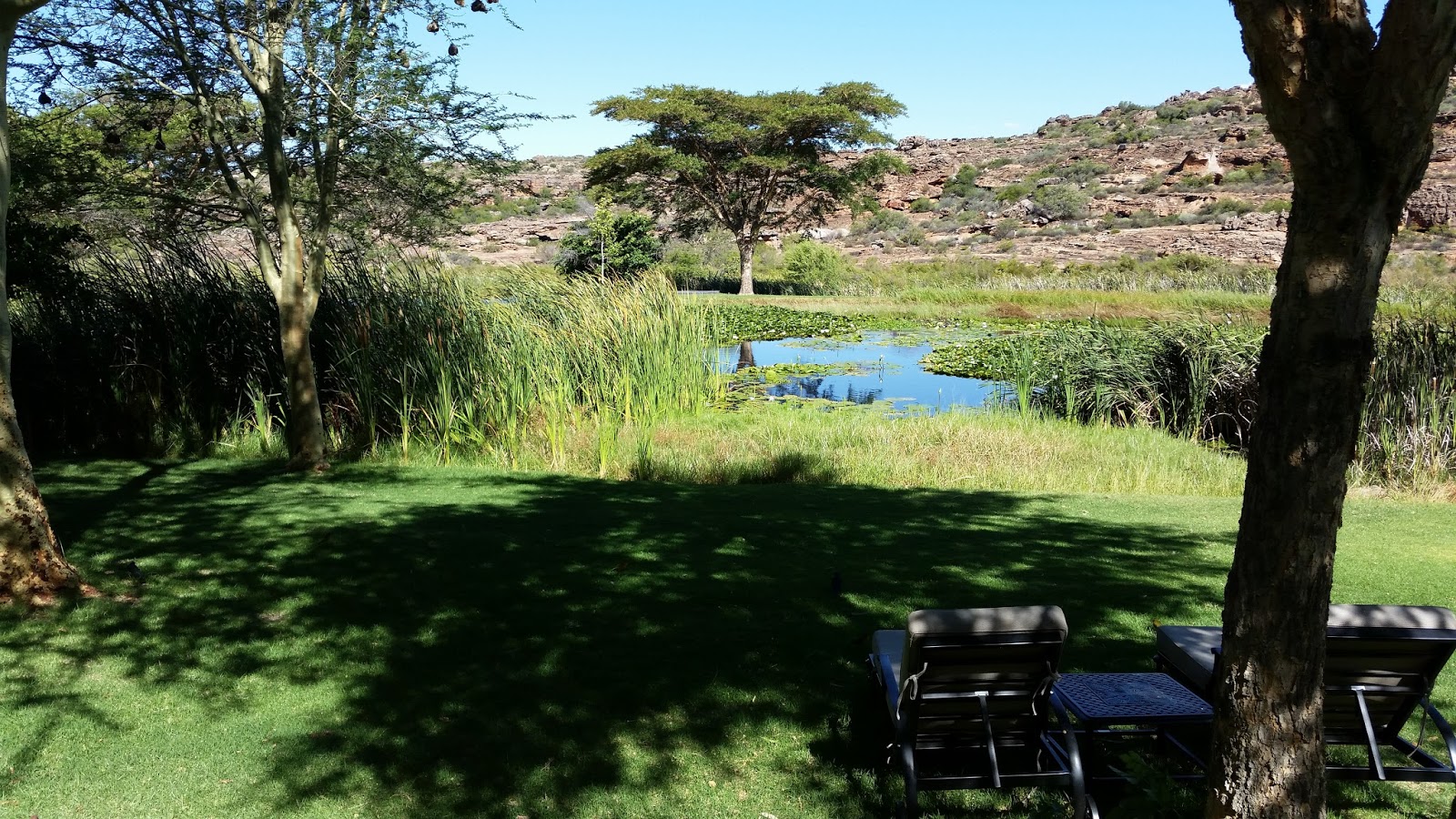
But there can also be sympathy for the early white settlers.  The lodge at Bushman’s Kloof where we stayed in the Cederberg, now with expansive lawns where the weaver birds gossip beside the lily pond, was once upon a time a farm where settlers (a dirty word these days, implying the colonialist past) struggled to grow potatoes and onions.  Even today it is many miles from the nearest small town.  What must it have been like for the farmers of the early 20th Century?  As the painfully cleared land of upland pasture becomes taken over once again by the fynbos, and one kayaks on the lake created by the dam that the early farmers built, it’s possible to picture a life that was hard for everybody and not just the indigenous population.

That’s enough philosophy.  On most holidays, a day or two before coming home we begin to feel that we would like to be home.  But not when you visit South Africa during the depths of the English winter.


See the beauty for yourself…

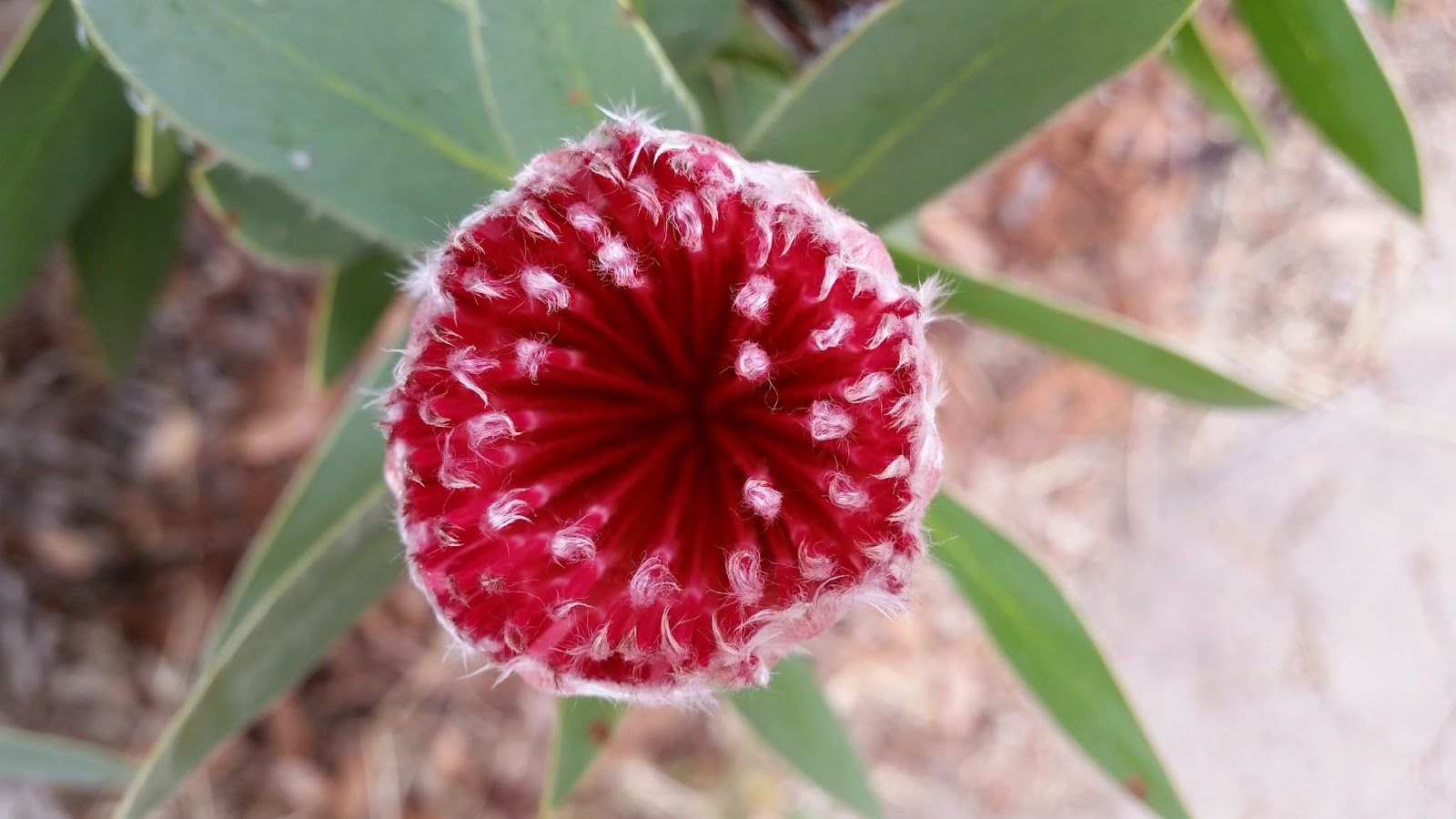
Flowers (Proteas above) from Table Mountain and Constantia

The Fireball Lily


Descending Skeleton Gorge, Kirstenbosch


Flowers in the Kogelberg Mountains


Nivenia Stokoei


Muizenberg beach


Chapman's Peak drive

Sunset at Hout Bay

Cape Dutch residence, Constantia Glen

A Swartobie (Black Oystercatcher) wonders about paddling, Betty's Bay

View from our verandah, Bushman's Kloof

Tricky climbing up onto the escarpment, Cederberg Mountains

Typical view on the plateau, Cederberg


Yellow Weaver, Bushman's Kloof

San rock art, Bushman's Kloof

Cape Zebra, Bushman's Kloof

Bontebok, Bushman's Kloof

Charcuterie, Hidden Valley Winery, Stellenbosch


Some beautiful Royal Gala apples from Deepdale

Day-Night game at Newlands, Cape Town
Geoffrey making me laugh

Newlands


Some of Peter Tempelhoff's creations, Greenhouse, Cellars Hotel
Rabbit terrine, foie gras mousse, garden plums, black bean dressing, cashew glass


Fillet of sea bass with Cape Malay sauce, crayfish bisque

'Four degrees of cheese'
50, 20, 8, -2 degreesC 

Madagascan chocolate gateaux, pistachio ice cream with honey, saffron, and caramel


Tuesday, February 9, 2016

The Faroe Islands

The Faroe Islands

“In the stormy seas, and the living gales,
Just to earn your daily bread you’re faring
From the Dover Straits to the Faroe Islands
As you hunt the bonny shoals of herring”
Ewan MacColl – The Shoals of Herring

I have always 'needed' to go and visit the Faroe Islands.  Just like a photograph in my school geography book set me off sailing to the Lofoten Islands; singing that song at folk clubs over the years, the myth of the Faroes seeped into my soul.  Glimpses of the islands filmed for the ‘Coast’ series of the BBC finally forced me into making the journey.  After an interval of seven months since our visit, when we had what my wife would describe of one of our worst ever holidays, I’m forced to disagree, and to say that the place still has me in thrall.  Of course it had its misery moments – it allegedly rains 360 days out of 365 in the Faroes, and our experience of rain at some part of every day was not therefore unique – and one has to fly to Denmark first to get there – but the islands are indeed spectacular, and if you want to get away from it all then the Faroe Islands are the place for you.

Flying on Atlantic Air up from Copenhagen (one flies first from London for two hours in the wrong direction, and then two hours back, but a bit further north), the first inkling that all was not calm, sweetness, light and sunshine came as we descended into the cloud and began to get a severe buffeting.  Although only a modicum of people travel each day, at least there is a rather solid Airbus around you.  Just how solid it needed to be we were about to find out…

Rattling down out of wisps of cloud the first indication of the storm around was the sight of the sea covered in white horses.  Glimpses of jagged rocks and mountains shrouded in wind-whipped clouds began to show that land was near, and eventually we flew down below the surrounding ridges of the mountains on either side and with white knuckles on all hands we touched down by stages and yawed and veered our way down the runway.

In the small arrivals hall, the Captain, a grizzled greying Dane with icy blue eyes admitted that the landing was not out of the ordinary.  ‘Ja it gets windy here in the fjord’ he said.  The runway is 120˚ and the wind was northeast at 70˚.

How to describe the landscape in the Faroes?  The nearest I can offer is that it’s like Scotland on steroids.  Narrow ridges leading to snowcapped peaks fall steeply into the sea.  Most of the slopes, no matter how steep, are covered with green grass.  This can be misleading and dangerous as we once stumbled down a mountain, thinking that the grass would be safe.  It’s so steep in places that you almost feel you need to cut steps with an ice axe.  Uncrowded is another good description.  In our one and half hour drive to Gjogv, our residence for the next five nights I think we saw about a dozen cars, and only one in the twelve miles after turning off the main inter-island road.

Rather than a detailed description, here are the highlights:

·         Spectacular coastal walking, with hills, cliffs and mountains generally on a vaster scale than the UK
·         Fascinating bird life, skuas, oystercatchers, plovers, gannets, puffins, eider ducks, turnstone, arctic terns, whooper swans, etc
·         Emerald islands, with snow capped peaks, even in June
·         Waterfalls everywhere, the result of all that rain
·         Friendly helpful people
·         Beautiful but simple old wooden buildings and churches
·         Storms and seascapes writ large
·         A feeling of remoteness, being close to nature, and peaceful isolation

Disadvantages:

·         Rain.  Have you ever wondered where all those depressions on the weather forecasts end up?  Correct, roughly half way between Scotland and Iceland (62˚ N and 7˚ W)
·         Temperature.  Rarely more than about 12degC.
·         It takes a long time to get there and is comparatively expensive because of the double flights.  There are two flights a week from the UK – from Edinburgh.  There are ferries which link Torshavn with the outside world but seas are generally rough.  A friend sailed a 70 foot vintage pilot cutter from the Shetlands with about 15 others.  Only three people on the voyage were not seasick, and it turned out that most of the crew were in fact professional fishermen…  You have been warned!
·         Like Scandinavia, alcohol is expensive
·         Accommodation is generally basic
·         Surprisingly, the fish offered on the menu is rarely plentiful and rarely extensive.  Forget about crab, lobster, shellfish – it doesn’t seem to feature commonly on menus.  There is extensive fish (salmon) farming in the cold and unpolluted waters of the fjords, but most of it is apparently sold to Russia.  This is something to do with being (sort of) outside the EU and therefore not being required to take economic sanctions against Russia.

And here are some photographs…


Eidi

Saksun

Octagonal wooden church, Haldorsvik


Arctic Skua

Oystercatcher - the Faroes' National Bird

Church interior - Eidi

Whooper Swan

Hvalvik - the oldest wooden church in the Faroes

Eider ducks and a mandarin duck

On the way to Gjogv

Evening light at Gjogv Harbour

Golden Plover - a sound like a rusty gate!


Vidareidi Church

Looking out at the Eastern Islands from above Vidareidi

Bosdalafossur (Bosdal Waterfall)

The walk from Gjogv to the Ambadalur Valley
Risin and Kellingin rocks (the giant and the witch) from Ambadalur valley cliffs

View of Risin and Kellingin rocks from Tjornuvik

View of Funningsfjordur from col between Tyril and Middagsfjall

Saturday, December 12, 2015

Folk Club

The Baker Arms, Child Okeford, Dorset

A slightly unusual post this one, but a puff for the 'Come All Ye' which happens on the second Thursday of the month at the above pub in the wilds of Dorset.  Through a curious chain of circumstances I met up with Chas Upton who runs the above get together, only 50 years or so after he ran the Grosvenor Folk Club, on the London Road in Bath, where we had many prestigious and charismatic guests, including Martin Carthy and Dave Swarbrick, The Halyard, Cyril Tawney, Alex Campbell, The Strawberry Hill Boys (before they became The Strawbs), the Yetties, Fred Wedlock, and many more.  The life of the front man, introducer, producer, MC, warm-up singer is not easy, but Chas did it well.  He now has a fine group called Fippeny Piece and fronts the above mentioned Come All Ye.  Having spent some of my first three years at medical school hosting and doing warm up for a folk club at International Students' House in London, I have felt the urge to get back on the road, so this was my first gig for quite a long time.  For those interested I sang Lord Franklin's Expedition (Martin Carthy version) and a song by Ralph McTell called The Maginot Waltz.  Remarkable how many truly talented people crawl out of the woodwork at events like this though - if I remember aright there were two fiddlers, four recorder players, one saxophonist, one autoharp player (last time I saw one of those Peggy Seeger was playing it), several bells, two bodhran, one bagpipes, one gaelic harp, a bass guitar, a tambourine and about four guitar/singer combinations.  The Mummers turned up, and a good time was had by all.  A few photos give you the feel of the occasion and I hope you can hear a typical reel with most of the players joining in:


Happy singing and Happy Christmas!

Thursday, October 8, 2015

Ypres and the Menin Gate. Westhoek, Belgium (Flanders Fields)

The Menin Gate


At 8pm precisely every evening, snow, rain or shine, the Last Post is sounded by buglers at the huge gate which leads in an Easterly direction out of the town of Ypres, called in Flemish Ieper (pronounced Ee-purr), and by the British and Allied troops in the First World War ‘Wipers’ (see the 'Wipers Times' below).


Three pages from the famous 'Wipers Times'


Since the beginning of the centenary of WW1 in 2014, increasing numbers of visitors, tourists if you will, have come to this place to remember and to pay homage.  The Menin Gate, the Menenpoort, has become a focus for all those who feel touched by this conflict to come and remember and make what a friend of mine has called ‘An Observance’.  The advantage of this description is that it does away with any religious or pacifist ideals.  It simply describes the pull that those who come feel, without explaining why.  Indeed, it would be foolish to suggest that people come to gain an understanding.  How can one understand the incomprehensible?  And is there any use in coming here while myriad barbarous armies still hold vast numbers of peoples in subjection?  These facts are beyond us.  Neither is there anything one can do about those who are already dead.  But what is it motivates British, Australian, New Zealand, Canadian and other commonwealth citizens, all at least three generations separated from those who fought here to come and ‘pay their respects’, to lay a wreath perhaps.  For some families there must be a sense of closure – a grandfather lost in a distant land to whom no subsequent member of the family made obeisance and acknowledgement.  This perhaps explains, apart from the notable anniversaries of particular battles why so many Australians were present when I visited on Friday September 18th, 2015.  For those who only have a vague inkling that the Menin Gate is important; like its counterpart on the Somme at Thiepval, it is a memorial to the missing.  Almost 55,000 names of those who died and were never found are inscribed here.  The names of UK soldiers who were lost up until 15th August 1917 were carved on the stone.  After that the space for names ran out, and the remainder are commemorated at Tyne Cot, near Passchendaele.  The first ‘Last Post’ was sounded at the inauguration in July 1927.  If you wish, you can listen…


During a tour of the battlefields and memorials of the Ypres Salient, the contrast between the reality of 100 years ago and the here and now constantly intrudes.  Next to the Essex Farm cemetery, which contains the bunkers used as field hospitals by John McCrae, the Canadian army surgeon who wrote the poem ‘In Flanders Fields’, cars race by on the Ypres bypass.  McCrae had seen service in the Boer War, but volunteered again for service in 1914.  He even brought his horse, ‘Bonfire’, with him.  He died in the last year of the war from pneumonia and meningitis.  The poppies which he left in his poem as an indelible reminder of the experience grow on poor or disturbed ground, and were everywhere in Flanders.  Nowadays however, at Essex Farm, no trace of a poppy is seen.  The fertile flat farmland, as far as the eye can see, is uniform, cultivated, and carries no visible reminder.  Even at the nearby statue of ‘The Brooding Soldier’, a Canadian memorial, the fields run up to the little road at the side, with not a trace of red except for the enormous agricultural machines which chug along the neat furrows.


The 'Brooding Soldier'

Adjacent to the Brooding Soldier memorial, no poppies, just red machines


Another place of interest, Langemark Cemetery, is a vast and sinister necropolis of German dead.  In later years, owing to the legend which grew up around the many dead of the 22nd and 27th Reserve Corps buried here, it became a place of pilgrimage for Adolf Hitler.  The myth of heroic German students, going to their death singing the Deutschlandlied, proved a powerful propaganda tool.  And until the De-Hitlerisation of Germany, there was a Langemarckstrasse in almost every town.  24,917 German soldiers and airmen are buried here.  The expressionist statues of soldiers by Emil Krieger give an otherworldly and alien feel to this cemetery.


Passendale, previously Passchendaele, is a tiny village in the middle of further vast tracts of unremarkable and innocent-seeming farmland.  If it were not for the association with the 3rd Battle of Ypres in Summer and Autumn 1917 it would be only too easy to pass by here, on the way to somewhere else…  It is of course immortalised as the site of the largest mud and blood bath of the First War.  The largest British Commonwealth cemetery anywhere, at nearby Tyne Cot, is the most popular place to visit in the whole of this region.  11,956 Commonwealth war dead are buried here, and the memorial wall contains the names of 34,957 missing who died after 15th August 1917.  Here again, the everyday and the ironic seem to intrude.  Perhaps it is the very popularity of the place – there are many visitors every day of the week.  But something jars: parties of schoolchildren roam all over, even climbing the central memorial cross, shouting at one another, playing games, fiddling with iphones and ipods.  Is it right to drag these armies of young people to this place?  Their youth gives them that impenetrable belief in their own immortality.  What would the armies buried under the turf think?  Or should one agree with David Geraint Jones, war poet of the Second World War, who wrote ‘… Your peace is bought with mine, and I am paid in full, and well, if but the echo of your laughter reaches me in Hell’.*


The tour of the Ypres Salient teaches one a few things which had been a puzzle in the past.  Why were Hill 60 and Hill 62 so called?  (They were 60 and 62 metres above sea level respectively).  Why was the mud of Passchendaele, which swallowed entire trains of supplies, horses, men, and armour, so severe?  (The heavy rains of late July 1917 fell on agricultural land whose elaborate drainage system of ditches and channels had been destroyed by the bombardment).  And why was it a ‘salient’?  (The bulge in the battle lines around the town of Ypres created a classic salient, which in warfare is a military position which can be attacked, but can also fire, on three sides).

Returning to Ypres, another oddity.  Sipping a glass of Passchendaele beer in a lovely old bar, it is hard to believe, but true, that this is an enormous theme park, if you will, a recreation, a ‘Disney’.  Many people, including the British, did not want the ruins of Ypres to be razed and rebuilt.  Churchill said; ‘A more sacred place for the British race does not exist in the world.’  And yet it was, and the Menin Gate, as night falls, gives a glimpse through the arch of the beautiful Cloth Hall, Belfry, and St Martin’s Cathedral, such as it might have looked a hundred years ago.

These are sombre musings, and I can’t help feeling that those carefree children might someday return with their children or grandchildren, and feel differently about the silence that hangs about these places.


But finally, and most upsetting of all.  At Essex Farm Cemetery, amid the neat rows, is the stone to Valentine Joe Strudwick, one of the youngest soldiers to die in the Great War.  Others may have been younger – there is some dispute over the family names and the exact ages, but Joe is known to have been only 15 when he was killed on 14th January 1916.  Here is a photograph of his memorial.

 
Somehow, most upsetting of all...


Postscript:

John McCrae's poem.  Pacifists prefer to quote only verses one and two...


*David Rhys Geraint Jones is an intriguing and little known figure.  His poetry is scarce and extremely difficult to find.  I first discovered the poem referred to in the post above in an anthology of Second World War poetry edited by Brian Gardner entitled ‘The Terrible Rain’, published by Methuen, London, in 1966.  The poem had been taken from an earlier anthology published in 1950 by Oxford University Press, then entitled, ‘For Your Tomorrow’.  Jones died of wounds received in Normandy on June 28, 1944.  His parents lived at Merlin’s Hill, Haverfordwest, Pembrokeshire.  He had been educated, first, at Haverfordwest Grammar School (as was I), later at Cheltenham and Trinity Hall, Cambridge.  Gardner titled the poem ‘The Light of Day’, which is taken from its first line, but it seems that it may originally have been entitled ‘Your peace is bought with mine’.  The three poems Geraint Jones wrote in early 1944 have also been set to music by a horn player, Anthony Randall.  Perhaps even more famous is another of the three entitled, ‘Let me not see old age’.  Here are both of them:


The Light of Day
The light of day is cold and grey and there is no more peace
By the high white moon-washed walls, where we laughed and where we sung;
And I can’t go back to those days of short unthinking ease,
When I was very foolish and you were very young.
For you the laurel and the rose will bloom, and you will see
The dawn’s delight, firelight on rafters, wind, seas, and thunder,
Children asleep and dreams and hearts at ease, when life will be,
Even at its close, a quiet and an ageless wonder.
For me the poppies soon will dance and sway in Haute Avesnes:
The sunrise of my love slides into dusk, its day untasted:
Yet as I lie, turf-clad, and freed of passion, and of pain,
I find my sacrifice of golden things not wasted;
Your peace is bought with mine, and I am paid in full, and well,
If but the echo of your laughter reaches me in hell.


Let me not see old age

Let me not see old age: Let me not hear
The proffered help, the mumbled sympathy,
The well-meant tactful sophistries that mock
Pathetic husks who once were strong and free
And in youth’s fickle triumph laughed and sang,
Loved, and were foolish; and at the close have seen
The fruits of folly garnered, and that love,
Tamed and encaged, stale into grey routine.

Let me not see old age; I am content
With my few crowded years; laughter and strength
And song have lit the beacon of my life.
Let me not see it fade, but when the long
September shadows steal across the square,
Grant me this wish: they will not find me there.


Wednesday, August 26, 2015

Edinburgh Festival 2015

To most people the festival is synonymous with the ‘Fringe’.  This is not only because Fringe events outnumber the core festival events by many hundreds, possibly thousands to one, but because of the greater accessibility of the Fringe.  It’s impossible to walk anywhere in the centre of Edinburgh without being assailed by ‘Flyerists’, the often bizarrely costumed actors from the many events taking place who are competing for your attention and for your business.  The Fringe is the nursery of talent, but many more times it is the kindergarten of mediocrity.  Without wanting to sound like an entry to ‘Pseuds Corner’, the infamous column in Private Eye which lampoons pomposity and pretention, here are a few illustrated gems from Edinburgh.  One advantage of going to classical music Fringe concerts is that they are often in Edinburgh’s lovely old churches, where the occasional surprise awaits:


The Canongate Kirk - an unexceptional looking facade


Robert Fergusson, poet. Born 1750, died in Edinburgh's Bedlam in 1774.  Influenced Robert Burns
Statue outside the Canongate Kirk

Magnificent bronze of Robert Burns (1759-1796) inside Canongate Kirk


Unesco City of Culture, 2015.  'Books, Words, Ideas'


The other Greyfriars Bobby.  Not many tourists see this one, presented by the USA, just below the Western walls of Edinburgh Castle


Roy Lichtenstein - his take on Monet's Nympheas, Sign writer's enamel on stainless steel (plus indistinct portrait of photographer)

Duane Hanson's wonderful 'Tourists' sculpture, 1970.  Part of permanent collection, Museum of Modern Art 1


Not a sculpture - 'Blowers' reacts with horror at meeting Andrew McLeod

Is this the largest piece of modern art?  Landform at Scottish National Gallery of Modern Art 1

Wonderful piece by Kwang Young Chun, a Korean artist, Dovecot Gallery.  See below for details...
Second paragraph a possible entrant for Pseuds Corner, but at least it explains how the art/sculpture is done
Glenys McLaren kicks Kwang Young Chun into touch
Another KYC exhibit


The complete collection of tickets!
Bizarrely titled shows are everywhere...

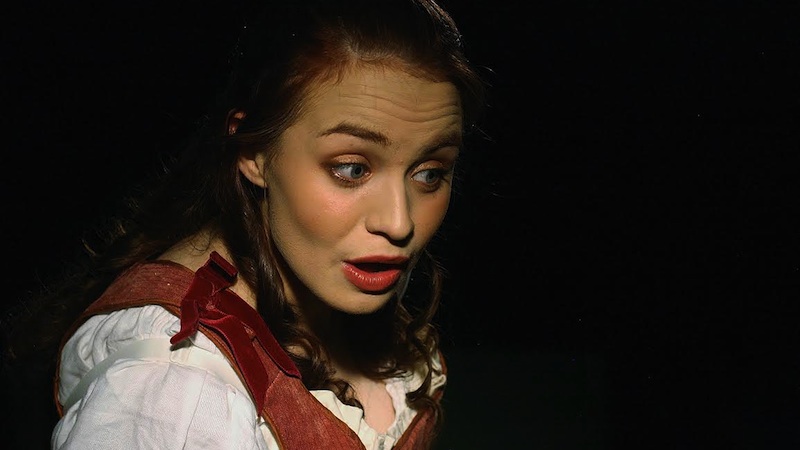
Lucy Formby as Nell Gwyn - you heard about her here first!
A Fringe winner.  'Swallow' by Stef Smith.  Best described as 'challenging' in the wake of disturbing plays such as those by Sarah Kane.  The acting by Sharon Duncan-Brewster, Anita Vetesse, and Emily Wachter is nonetheless remarkable.
And finally, two images from Maurits Escher - the first major exhibition of his work in the UK.  Above: Day and Night
Escher's final wood block print - done in his 70s - mortally ill from cancer, the concentration required to produce this image is remarkable.  All at the Scottish National Gallery of Modern Art 2


One of my least 'wordy' blogs - they say a picture is worth a thousand words...


Saturday, June 13, 2015

The Royal Bournemouth Hospital CIU Tenth Birthday Rap - As Described By a Grateful Patient


Cautionary Note: this post is unlikely to mean anything to anybody who does not work in Cardiology at Royal Bournemouth Hospital!


Yo dudes hey come on cut da crap
This is yo’ 10th Birthday rap
Listen what I’m putting down
Yours is the finest place around
Fo’ heart attacks and all that shit
I tell you baby  - you is it.

I gone down Boscombe just las’ week
I met dis guy, gave me some heat
He axed me did I want to score
Some coke so I said ‘Tell me more.’
Now I is used to doin’ weed
But man dat stuff was good indeed.
I sniff, I smoke, thought it’s the best;
Then I got me dis pain ‘n the chest.
Man that sure was powerful crack –
I got myself a heart attack.

Nearly scared myself to death
When I had that darned VF:
‘Crash’; I thought I has been tasered,
Shot, or maybe I was lasered;
The paramedic says to me,’
‘Wake up man: can you see me?’
We shocked you sir; going by the rules,
We gave you several hundred Joules.
Ah said, ‘Yo’ takin’ me to heaven?’
He said, ‘No, man, just Bee Haitch Seven.
We won’t hang round in A and E
You gone and blocked yo’ LAD.
We need to get some blood going trew;
We taking you to C-I-U.

Now wid yo’ ‘lectrics switched back on
We won’t need Richard, Mark, or John.
We need a plumber, what is mo’
We gonna give you Reopro.
We got Peter O’Kane, Manas, Tim;
You really are a Lucky Jim.’
(He says) ‘This will make you smile;
We got a guy dey call de Rotweil.
We get de Asian team come in:
Suneel or new boy Dr Din.’
I said, ‘Dose guys are good at cricket
But I’se kinda on a sticky wicket;
Come on man, just be a pal’
He said ‘We got one gal.
Yeah Rosie is the one for you;
Just let her loose, see what she’ll do.’

So in I go at half past five
I is de luckiest guy alive
Surrounded by some lovely lasses
But I’s lyin’ down, caint make no passes.
These girls mean business, they look tough,
They go and cuts my pants right off.

First thing Rosie says to me
‘We gonna give you stuff IV
Opiates, heparin, drugs like dat;’
I says, ‘Hey, morphine; dat is phat.’
I’ll come and see you guys again
When I gets dis sort a pain.’
So Rosie stuck me; in she went
First a balloon and then a stent.
So now I’m struttin’, back in town
I got the finest care around.
I’ve bid those lines of coke ‘Farewell’ –
Jus’ give me as’prin an’ clopidogrel.
So now I wish you all 3 cheers
An’ here is to yo’ next ten years...

Sunday, May 10, 2015

Some post election thoughts...

Here's one for those with a medical bent -

Would Nicola Stugeron be good for restoring a sense of equilibrium in the Labour Party?  Or merely help to combat nausea?

For those who are wondering what unemployed political leaders might be up to -


Walesoncraic is an extraordinary website, but I don't know who runs it.  A fun page on its site is entitled, 'What if famous Welsh people had had mobile phones back in the day' with entertaining texts from such legends as Dylan Thomas, Richard Burton, Gareth Edwards, JPR, and Owain Glyndwr...

http://www.walesoncraic.com/if-famous-welsh-people-had-mobile-phones/

But seriously for our friends and relatives across the sea, it has been a fascinating few days with a remarkable end result.  It seems clear that the Labour dogma of class envy just did not appeal to a majority - because the majority of people are working hard to better their own lives.  Ed Milliband's resignation speech indicated clearly that he had not thought this through, whereas Nick Clegg's resignation speech was full of thoughtful introspection.  Even Farage's resignation speech was well thought out, though parenthetically you could here him saying, 'Look, that's enough of this caper, I'm off to the pub for a pint and a fag (that's a cigarette to you Americans).'

I do believe that people were terrified of what Labour would do to the economy, given their previous track record under Gordon Brown, and some if not all would have been aware that both Ed Balls (Shadow Chancellor) and Ed Milliband were key members of Gordon Brown's 'think tank' on economic matters.

Two more items, one poignant, but both of historical interest.  Following a letter to the Daily Telegraph about a fighter pilot who took a teddy bear with him on all his missions in WWII, a plethora of spin off letters and the teddy bear went viral.  But I noticed the following letter a few days later, which said more about life in general, I think:

Valiant Bear
SIR - I was interested to read about the teddy bear that accompanied a Battle of Britain pilot (report, April 21) as I too have a little bear, with my maiden name tape sewn on it, which I gave to my fiance to take with him on his operations over Germany during the Second World War.  He was a Mosquito Night Fighter pilot and flew 50 ops accompanied by my bear, and together they won the DFC.  We were married for 50 years but now, sadly, I just have the bear.
Jean Mellows
Dorking, Surrey

And this too is of historical interest, though perhaps in a different sense.  It appeared in the Daily Telegraph on or about St George's Day (23rd April for those in other countries).  A 'Sketch' from Michael Deacon:

Handy with a lance, that St George, but would he make it through immigration?

UKIP, it might not surprise you to learn, was the only party to hold press conference devoted entirely to the subject of St George's Day.  As journalists entered the room, party officials were handing out red-and-white jester hats hung with tiny St George's crosses.  Patrick O'Flynn and Peter Whittle, Ukip's two spokesmen on St George-related issues, sat at a table decorated with English flags.  Journalists invited them to wear the jester hats, too.  Somewhat unpatriotically they declined.

Ukip has pledged to make St George's Day a bank holiday in England and St David's Day a bank holiday in Wales (just as St Andrew's Day is in Scotland).  St George, of course, was not himself an Englishman: he was born in what would now be Turkey.  I asked whether Ukip would prevent St George from coming to live and work in England, or whether the party would consider him a skilled migrant.

"Well, I guess dragon-slaying is a skill," said Mr O'Flynn.  "But whether it's one that is in short supply for the British economy would be a matter for our migration commission."

Not an unqualified welcome, then.  Mr O'Flynn did add, however, that he wasn't "particularly hung up" about "where St George came from", which I hope Ukip's migration commission will take into account in its deliberations.

Over in Ramsgate, in the South Thanet seat he's contesting, Nigel Farage had arranged a celebratory drink at a working men's club.  The bar was festooned with English flags; the tables had them as tablecloths; even the barmaid's baseball cap had a St George's cross on it.

Mr Farage, a red rose blooming from his buttonhole, sauntered behind the bar for the inevitable photos of him pulling a pint.  Revelation of the day: he doesn't like Foster's.  Odd.  I though he wanted an Australian-style pints system.

He posed with an England flag, then a plastic England hat, then an apron with an England flag on it.  He also complained that England "gets a rotten deal" compared with Scotland.  "Our politicians are ashamed of the English flag, and they've appeased Scottish nationalism.  The history of appeasement is, if you keep giving in, they only come back and ask for more!"

Wasn't the United Kingdom Independence Party in danger of morphing into the England Independence Party?  "We're the only party with elected representation in all four corners of the UK!" he trumpeted.

"But here in Thanet we are certainly not ashamed to be English!"  He then rolled up his jacket sleeve to reveal England flag cufflinks, and announced that he'd had roast beef for lunch and was having fish and chips for dinner.

Did he really mean to quit as Ukip leader if he loses in South Thanet?  "Quit?" he cried.  "I'll be gone in 10 minutes!"  I have a strange suspicion that even the people who hate him would miss him.


As I said, of historical interest only, but great fun.


Finally, to interject a really mundane note, I hope to post some photos soon of our epic trip to Yorkshire last week, a county which is so different from Dorset that one can only wonder if where Nicola leads in Scotland, someone in a flat cap with a sheepdog (or to bring it right up to date - a sheepdog on a quad bike) will surely follow.  Passports to get into the Yorkshire Dales?  Don't whisper it too loudly...